 From the Mill Road
Spring Flowers, Fall Berries and a Night-Blooming Cactus in Two Ounces of Water
Herb Pharm's Heart Health is a liquid extract of hawthorn, night-blooming cactus, motherwort and ginger, made in Oregon. At the old mill we weigh everything, so I weighed one squeeze against a European cup of hawthorn tea.

This is a paid advertisement. Sponsored by Herb Pharm, LLC.

Milton Ashe is our house byline, and the mill in these pages is a composite of the small restored mills our writers have spent their Saturdays at.
The friends at the mill are composites too, and none of them stands for anyone's results; what this page says about the bottle comes from the maker's listing, its label, its return terms and the published sources, all read in September 2026.
There's an old mill on the creek road where I spend most Saturday mornings.
It grinds a few sacks of corn and wheat for visitors, and the rest of the time it just turns.
I'm one of the fellows in canvas aprons who opens the gate on the millrace at nine.
We sweep the flour dust, oil the gears, and tell the school groups the same story every week.
If you've ever heard a big wooden wheel turning, you know the sound.
It's a slow knock and splash, steady as a clock, and after a while you stop hearing it at all.
The visitors hear it, though.
They stand on the walkway with their coffee and watch the water fall off the paddles, and hardly anybody talks.
The story is simple, and it's the reason I'm writing this.
At a mill, nothing is taken on faith. Everything goes on the scale.
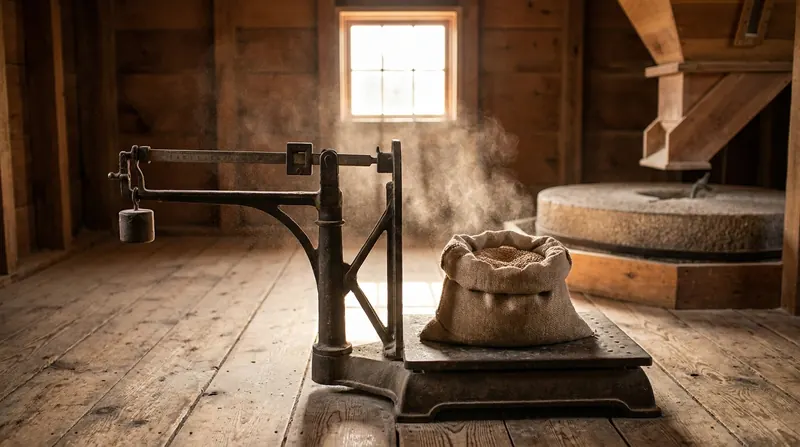
The grain gets weighed on the way in.
The flour gets weighed on the way out, and the difference tells you what the stones did with it.
You probably have your own version of that habit.
Maybe it's the tire gauge in the glove box, the rain gauge on the fence post, or the way you still check the receipt before you leave the store.
It's a good habit for a man past sixty.
It keeps you honest, and it keeps other people honest with you.
This summer that habit ran into a small amber bottle.
One of the fellows at the mill, a retired lineman who walks the creek road every morning, set it on the porch bench beside his coffee.
The front said Heart Health, and it came from Herb Pharm, a company in southern Oregon.
He wanted to know whether it had earned a place on his kitchen windowsill.
He didn't ask me what it would do.
He asked me the question we ask of every sack: how much is actually in one squeeze?
That's a better question than most of us ask in a store.
We read the name on the front, we look at the picture, and into the cart it goes.
At the mill we say it this way: the front of the sack is a promise, and the scale is the answer.
So I took the bottle's label home and did what we do with a sack of grain.
I weighed what goes in, I weighed what comes out, and I laid it next to the best measure I could find.
This page is that weighing, written out.
It's long, because I wanted every number out in the open, but you can read it the way you'd walk through the mill: one room at a time.
What Goes in the Hopper, and What Comes Out in the Sack
If you've never stood inside a working mill, here's the short tour.
Water turns the wheel, the wheel turns a shaft, and the shaft turns one heavy stone over another.
Grain pours into a wooden box at the top called the hopper.
It trickles down between the stones, and flour comes out the side into a sack.
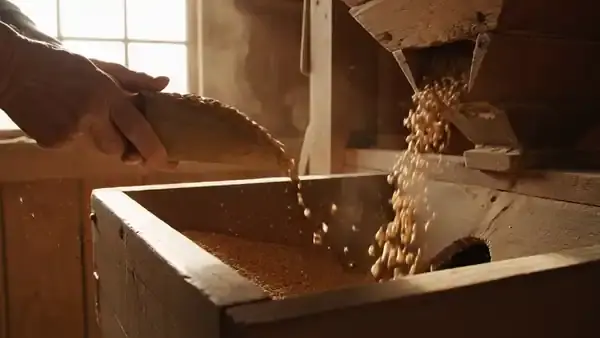
The old millers were paid in grain.
They kept a share of each customer's sack, so the scale was the most argued-over machine in the building.
A farmer wanted to see his grain weighed before it went in.
And he wanted to see his flour weighed before he carried it home.
Why does that matter for a bottle on a kitchen windowsill? Because a liquid herbal extract is made the same way, in principle.
A weight of plant goes in, a liquid comes out, and the label is supposed to tell you both numbers.
Most labels don't.
This one does, and that's the first thing in its favor.
Before we get to its numbers, though, I want to talk about you for a minute.
A weighing only means something if you know what you're weighing it for.
The Engine You've Got
You've probably noticed that you think about the heart and circulation more than you used to.
Not in a worried way, just the way you think about the truck once it rolls past a hundred thousand miles.
You listen a little more closely.
You change the oil on time, you keep the tires aired up, and you don't skip the small things.
Maybe it's the hill on the way to the mailbox, the stairs to the attic, or the long loop around the county fair in August.
You'd simply like to keep doing all of it for a good long while.
You don't need a bottle to feel that way, and you don't need one to act on it.
But if you're going to add one, it's worth doing the way you'd do anything else around the place: with your eyes open.
So what do most of us reach for? A small daily habit.
Something you can do at the kitchen counter without a fuss, that feels like looking after the engine.
For some men it's the morning walk.
For others it's oatmeal, a handful of walnuts, or a cup of tea in the afternoon.
And for a good many, it's something from the supplement aisle with the right words on the front.
That's where the trouble starts, and it isn't anybody's fault.
The supplement aisle is loud.
Every bottle is shouting a word, and most of the words are about the same three or four hopes you and I have.
How do you tell one bottle from the next? You can't, from the front.
You have to turn it around, and even then you need something to compare it with.
A number on its own is just a number. It needs a second number beside it before it tells you anything.
That second number is what this page is about.
So let's start where every good mill tour starts, at the scale by the door.
Little and Often, the Miller's Way
There's a rhythm to a mill that took me years to notice.
The stones never rush, and the grain never pours in all at once.
A good miller feeds the stones a little at a time.
Too much at once and the flour comes out coarse and hot, and too little and the stones grind on each other.
So the craft is in the pace. A steady trickle, all day long, and the sacks fill themselves by evening.
I think most good habits work the same way.
Think about the habits you've actually kept for years.
The morning coffee, the walk after supper, the Sunday call to your brother, the crossword in the afternoon paper.

None of them is big.
Every one of them is small, tied to a time of day, and easy enough that you don't have to talk yourself into it.
The habits that don't last are usually the heroic ones.
The gym membership in January, the diet that starts on Monday, the jug of green juice that goes off in the refrigerator.
The habits that last are small enough to keep on a tired Tuesday.
Why does that matter here? Because the bottle on the bench is built on exactly that idea.
Its label asks for a small measure, two to four times a day, between meals.
That's a miller's pace, not a heroic one.
And if you're going to take anything that way, day after day, you'd better know what's in each little measure.
A small measure taken often adds up, and it adds up to whatever is in it.
If there's a lot of plant in each squeeze, it adds up to a lot, and if there's a little, it adds up to a little.
Either one can be a reasonable choice.
But you should know which one you're choosing, and the only way to know is to weigh it.
Why the Front of a Bottle Is the Wrong Place to Start
The front of a bottle is written to be read from six feet away.
It has a name, a color and a word or two, and it has about three seconds to catch your eye.
The back of the bottle is written for the scale.
It's where the maker has to list what's inside, in order, and it's where the honest answers live.
Here's the catch with the back, though. Many herbal products list several plants and then print a single number for all of them together.
You learn the total, but you don't learn how much of each plant you're getting.
That's called a blend, and it's perfectly legal.
It's like a farmer bringing in a mixed sack of corn, wheat and oats, and the scale giving you only one weight.
You know the sack weighs fifty pounds.
You don't know whether it's forty pounds of oats and a handful of wheat.
One number for four plants is a start. It isn't the whole weigh ticket.
The bottle on the bench is a blend like that.
It lists four plants and gives one weight for the mix, and I'll show you exactly what that weight is.

But it also does something many bottles skip.
It prints how much plant went into each serving, and that's the number that lets you set it on a scale next to something else.
So the question isn't "Is it good?"
The question is "Good compared with what, and by how much?"
For that, you need a second measure to set beside it.
For hawthorn, the first plant on this label, Europe keeps a careful one, and we'll get to it.
A Cup, a Capsule or a Squeeze
There are three common ways to take a plant like hawthorn, and they're as different as grain, flour and bread.
Each one puts a different amount of plant in front of you.
The first is the cup. You pour boiling water over dried leaves and flowers, let it steep, and drink what comes out.
It's the oldest way, it's cheap, and the amount of plant is easy to see because it's sitting in the strainer.
The second is the capsule. The plant is dried, ground or made into a dry extract, and packed into a shell.
It's tidy and tasteless, and a lot of men already have a cabinet shelf full of capsule bottles they'd rather not add to.
The third is the liquid extract. The plant is soaked in a mix of alcohol and water until the liquid draws out what it can, and then the liquid is pressed off and bottled.
You take it by the squeeze, in a little water or juice.
The liquid has one big advantage for a man who doesn't want another capsule.
It's a small glass, not something to swallow whole, and it fits anywhere in the day.
It also has one big question, and it's the mill question again.
How much plant went into the liquid you're drinking?
With a cup, you can see the leaves.
With a capsule, the label usually prints a weight per capsule.
With a liquid, the answer depends on how much plant the maker soaked, and in how much liquid.
Some labels print that, and many don't.
That's not a knock on liquids.
It's just the difference between a sack you can open and look into and a sack you have to read the tag on.
You can see the leaves in a cup. In a liquid, you have to take the label's word for it.
The bottle on the bench prints it, which is why it was worth the trouble of weighing.
But before we weigh it, you should know what went into the soak.
Four Plants and Three Harvests
Before we weigh anything, let's meet what goes in the hopper.
The label lists four plants, and three of them come from very different places at very different times of year.
The first is hawthorn. It's a flowering shrub or small tree of the rose family that grows in temperate regions throughout the world. [1]
You've seen it, even if you never learned its name.
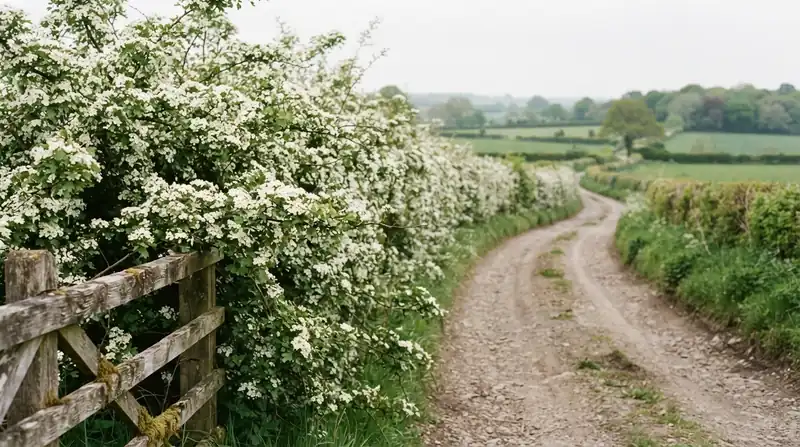
In England and across Europe it was planted for hedges, to keep cattle in their fields.
Here it grows along fencerows, creek banks and the edges of old pastures.
There's one below our mill, on the bank of the tailrace where the water runs back to the creek.
It's older than any of us, and in October the robins strip it of berries in an afternoon.
The thorns are why it made such a good hedge.
They're long and sharp, and no cow in her right mind pushes through a hawthorn row twice.
In spring it's covered in small white flowers.
In the fall it carries small red berries, which country people call haws.
The bottle uses both halves of that year.
The label lists the hawthorn's "flowering aerial parts & berry" together, meaning the leafy tops in flower and the fruit.
Where do they come from? The maker says the flowering tops are harvested each spring in France and Chile.
The berries are harvested each fall in the Pacific Northwest.
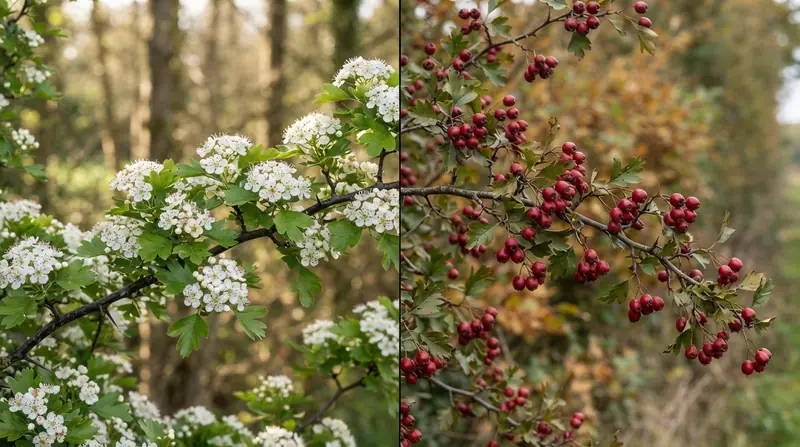
That's worth a moment, because the leaf and the berry are not the same thing on a scale.
We'll come back to that when we look at what's inside each one.
At the mill, those two seasons are the two busy ones.
In spring the millpond runs high and the school groups come, and in the fall the harvest festival brings half the county to watch us grind.
So I like that this bottle keeps the same calendar.
Part of its hawthorn is cut while our pond is full, and part is picked while we're grinding corn for the festival.
The second plant is a cactus that blooms at night. The label calls it Cactus grandiflorus, from the stem of a Selenicereus plant.
You may know it as queen of the night, or night-blooming cereus.
Its big white flowers open after dark, which is how it earned its names.
The maker says its stems are extracted fresh each spring, from plants grown in Florida.
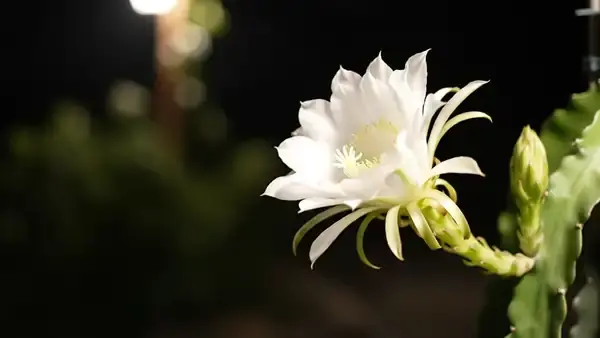
"Fresh" matters here.
Most herbs in a bottle like this are dried first, but this one goes into the liquid straight from the plant.
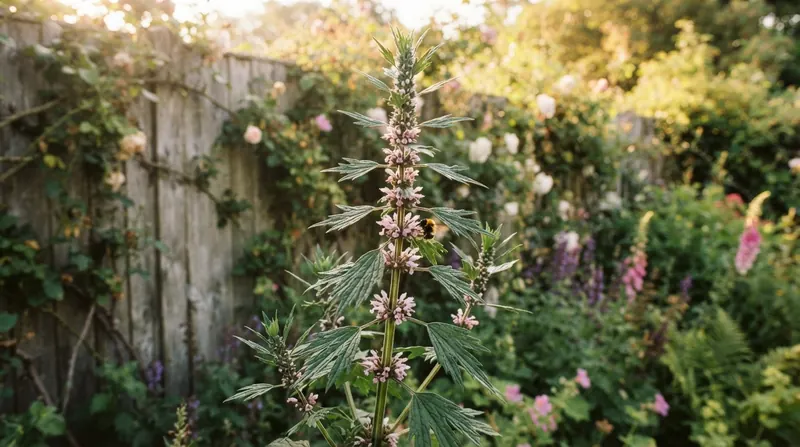
The third plant is motherwort. It's a tall, plain member of the mint family, with square stems and small pinkish flowers set in rings up the stalk.
It came from Central Asia and southeastern Europe, and now it grows along roadsides and old garden fences almost everywhere.
Pinch its stem between two fingers and you'll feel four flat sides instead of a round stalk.
That square stem is the calling card of the mint family, and it's how I first learned to spot it.
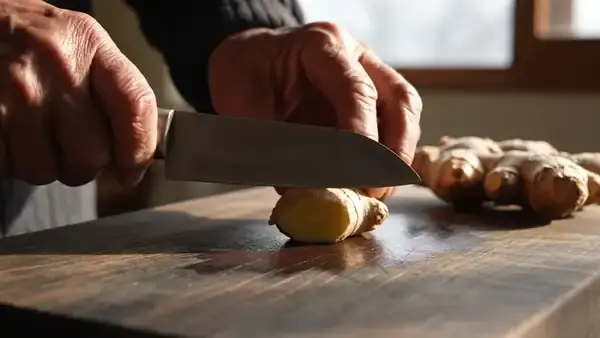
The fourth is ginger, the same knobbly root that's in your spice drawer.
It's the last plant on the label, and it's the one you'll notice first when you taste the glass.
The label calls it the rhizome, which is the botanist's word for the knobbly underground stem we all call the root.
The maker lists it as certified organic, and it's the plant that gives the bottle its bite.
So that's the hopper.
Spring flowers from France and Chile, fall berries from the Northwest, a fresh cactus stem from Florida, a mint-family herb, and a root from the spice rack.
Why so many places? The listing doesn't explain the choice, and I won't invent a reason for it.
But it does name each place and each season, which is more than most bottles bother to print.
Three harvests and four plants, poured into one small bottle.
All of it goes to one place in southern Oregon, where the maker turns it into liquid.
Which brings us, at last, to the bottle itself.
The Bottle on the Bench
Herb Pharm makes liquid herbal extracts in the hills of southern Oregon.
Its label still prints the town of Williams, and its offices are in Central Point, just outside Medford.
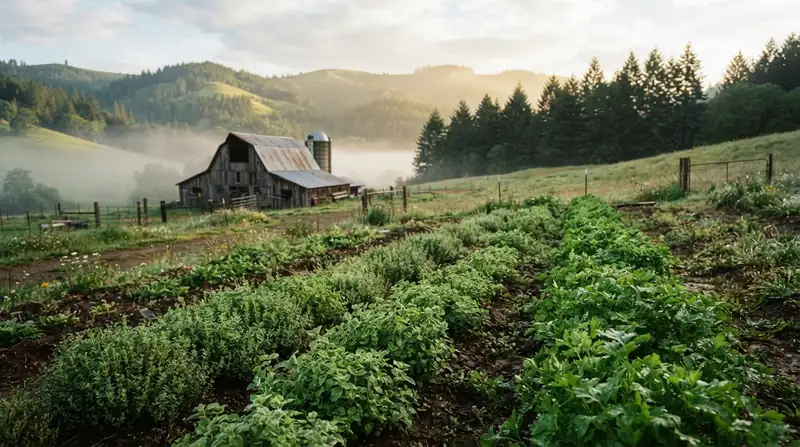
How are the plants grown? The listing says the ingredients are certified organic or responsibly wildcrafted.
Certified organic means grown on certified farms, and wildcrafted means gathered from where the plant grows on its own.
The listing also says the bottle is made without gluten and without animal ingredients.
None of that is a promise about what the bottle does, but it's the kind of plain fact a careful buyer likes to see printed.
Is it a big outfit? Big enough that its bottles sit on the shelves of health-food stores and online shops across the country.
And small enough that its labels still print the plant parts and the harvests, which is the kind of maker I'd trust to fill in a weigh ticket.
The product is called Heart Health, and it comes in a one-ounce amber glass bottle with a black rubber bulb on the cap.
Here it is, as the maker photographs it.
That's the whole bottle on one card.
Now let's read the back of it the way the fellow on the bench asked me to.
What does the maker say the bottle is for? The listing has one line of benefit, and here it is word for word: "Supports healthy function of the heart and circulation."*
That's the whole claim, the plain kind a dietary supplement is allowed to make.
You won't find more than that on this page either.
I'm going to talk about amounts, harvests and what the research can and can't say, and I'm not going to add a promise the maker itself doesn't make.
What else does the label ask of you? A few plain things, and they're worth reading before the first glass.
Shake the bottle well before using, take it between meals, and store it away from heat and light.
It also asks you to keep it out of reach of children.
That one's easy to skip past, so I'll say it plainly: a bottle with a rubber bulb looks like a toy to a grandchild.
Why between meals? The label doesn't say, and I won't guess.
It's simply the direction, and it's easy to follow if you tie it to the middle of the morning and the middle of the afternoon.
Why two ounces of water? Again, the label only gives the direction.
Two ounces is a quarter of a cup, enough to carry a small splash of sharp liquid down without a fuss.
What the Back of the Bottle Weighs
Turn the bottle around and you'll find the Supplement Facts panel.
The serving size is 0.7 milliliters, and there are about 42 servings in the bottle.
How much is 0.7 milliliters? It's what one squeeze of the rubber bulb draws up.
A teaspoon holds about five milliliters, so a serving is a small splash, around a seventh of a teaspoon.
Under that, the panel prints one line: "Proprietary extract blend, 642 mg."
That's the four-plant extract in each serving, with no split between the plants.
Then comes the line I was looking for.
The label calls it the extraction rate: 140 milligrams of fresh herb and 98 milligrams of dry herb per 0.7 milliliters.
What does that mean in plain English? It's the amount of plant that went into making one serving.
Some of the plants go into the liquid fresh, like the cactus, and some go in dried, so the label gives you both weights.
Now you have something you can put on a scale.
One squeeze was made from 98 milligrams of dried plant and 140 milligrams of fresh plant, all four plants together.
Is that a lot or a little? On its own, you can't say.
So let's find the second measure, the one Europe keeps for hawthorn.
A Squeeze Beside a Cup
Across the European Union, a committee of Europe's regulators writes a monograph for many herbs.
It's a dry document, and it's about the closest thing there is to an official measuring cup for a plant.
Its monograph for hawthorn leaf and flower lists, for adults, a tea of 1 to 2 grams of the cut dried leaf and flower in about five ounces of boiling water, up to four times a day, and at most 6 grams a day. [2]
That cup is the second measure.
The same monograph also lists a liquid extract, made one part plant to two parts liquid, at 1.84 grams a dose and 5.52 grams a day. [2]
That extract is a different strength from this one, so I'll stick with the cup, which is easier to picture.
Now set the two side by side.
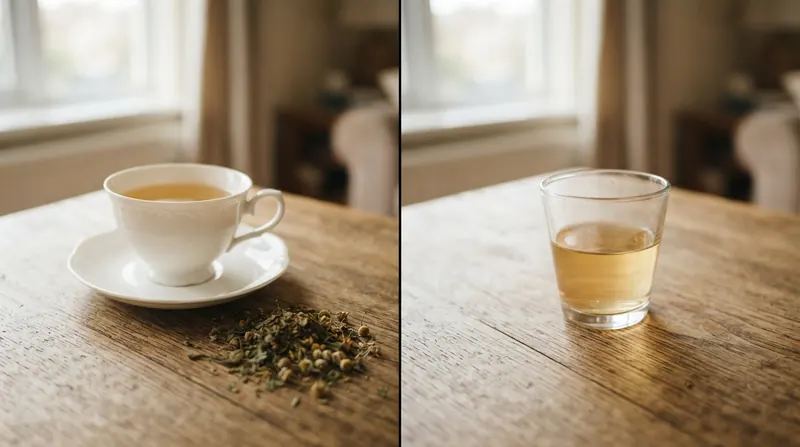
One European cup is 1,000 to 2,000 milligrams of dried hawthorn leaf and flower.
One squeeze of this bottle is made from 98 milligrams of dried plant plus 140 of fresh, and that's for all four plants at once.
Even if you counted the fresh plant as if it weighed the same once dried, which it wouldn't, one squeeze comes to 238 milligrams.
So how does it compare? One squeeze carries less plant than a quarter of the smallest European cup.
And the hawthorn is only part of that squeeze, because the label doesn't say how much of the 238 is hawthorn.
What about a full day? The label says two to four squeezes a day.
At four, you'd be at under a gram of plant for the whole day, all four plants together.
The European tea, at its upper limit, is up to four cups and as much as 6 grams of hawthorn leaf and flower. [2]
A full day of squeezes carries less plant than one small cup of the European tea.
I want to be fair to the bottle here.
A liquid extract isn't meant to be a cup of tea, and there's no rule that says it has to match one.
It's a different way of taking a plant: a little, often, in a splash of water.
The maker chose a small measure, and it prints that measure, which is more than most bottles do.
But you should know which one you're buying.
If what you want is the amount in Europe's cup, the cup is the way to get it.
A small measure, printed honestly, is still a small measure.
Here's the weigh ticket so far, the way we'd chalk it on the board by the mill door.
That's the amount.
Now let's look at what the plant brings with it, and at what anyone actually knows about it.
What the Record Says About Hawthorn
What does the research say about hawthorn? Less than the old hedgerow stories would suggest.
The National Institutes of Health's center for complementary health says there is little or no quality evidence on hawthorn for most uses. [1]
I'll say that plainly, because it matters more than anything else on this page.
Hawthorn has a long tradition behind it and a thin modern record, and those are two different things.
Is it considered low-risk? The same center says short-term use of some hawthorn supplements may pose little risk, but that no studies have tested use beyond 16 weeks. [1]
It lists possible side effects: dizziness, nausea, vomiting, diarrhea and muscle aches. [1]
There's one more thing in that same fact sheet, and it's a reason to buy from a careful maker.
The FDA has warned about several hawthorn root products labeled "tejocote root" that actually contained yellow oleander, a toxic plant. [1]
That alert was about root products from a Mexican hawthorn, not about leaf, flower or berry.
But it's the mill lesson again: you want to know exactly what went into the hopper, and from which part of the plant.
This bottle names its parts: flowering tops and berry.
It names where they're grown and when they're cut, and it says the ingredients are certified organic or responsibly wildcrafted.
That doesn't turn a thin record into a thick one.
But it does answer the question a careful buyer asks first, which is "What exactly is in here?"
What's in the Leaf, the Flower and the Berry
Europe's regulator lists the main compounds of hawthorn leaf and flower in its assessment report.
They're mostly flavonoids with names like vitexin, hyperoside and quercetin, plus catechin, epicatechin and a family called procyanidins. [3]
The European pharmacopoeia also sets a floor for quality.
The dried flowering branches have to carry at least 1.5 percent total flavonoids, counted as hyperoside. [3]
Are the leaf and the berry the same inside? No, and this is where the two harvests start to matter.
In a chemical analysis of a North American hawthorn, the leaves held far more hyperoside than the fruit, about 2 to 11 milligrams per gram against 0.5 to 1. [4]
The leaves in that analysis also held a family of vitexin compounds, 2 to 5 milligrams per gram, that turned up in the fruit only in traces. [4]
Both the leaves and the fruit held epicatechin and procyanidins. [4]
A second analysis, of a European hawthorn, compared buds, flowers and fruit at three stages of ripeness.
The flowers held the most vitamin C and vitamin E, the over-ripe fruit the most sugars, and the unripe fruit the most of the plant's phenolic compounds. [5]
What does that tell you about this bottle? That the spring harvest and the fall harvest bring different things.
The flowering tops from France and Chile and the berries from the Northwest are not interchangeable, and the label doesn't say how it splits them.
Those are analyses of the plant, not studies in people.
They tell you what's in the sack, not what happens after you swallow it.
Has the berry always been something people ate? Yes, and that's one of the nicer facts in the whole file.
A 2012 review notes that Native American tribes ate hawthorn fruit as food, and that it has a long history as a food in Europe and China. [6]
The same review adds that the chemistry varies from one hawthorn species to another. [6]
The bottle says only Crataegus species, which is honest, and also a reminder that "hawthorn" is a big family.
Knowing what's in the sack is the first half of the weighing. The second half happens after you swallow.
How Much Gets Through the Sieve
At the mill, we sift the flour after it comes off the stones.
The fine part falls through the screen, and the coarse bran stays behind.
Your body does something like that with every plant compound you swallow.
Some of it gets through into the blood, and a lot of it doesn't.
How much of hawthorn gets through? Mostly, nobody knows.
Europe's own assessment report says only a few studies of how the body handles hawthorn have been done, so how it absorbs and clears these compounds remains largely unknown. [7]
One study the report cites measured an oral uptake of only about 3.57 percent for vitexin rhamnoside, a flavonoid typical of the leaf. [7]
In rats, two related compounds peaked in the blood within 45 minutes and had half-lives of about two and a half hours. [7]
A 2025 study in cells and rats looked at the main flavonoids of hawthorn leaf.
They crossed the gut lining poorly, hyperoside somewhat better than the rest, and the authors classed them as compounds with poor oral uptake. [8]
And once in the blood, do they reach the blood vessels? Here's the most careful study I found, and it's a laboratory one.
Researchers tested twenty-one compounds found in hawthorn, or made from it in the body, on isolated blood vessels from pigs and rats. [9]
Two of the twenty-one widened the vessels.
But only at concentrations far above the amounts typically measured in human blood. [9]
That's not a knock against hawthorn.
It's simply where the science is: interesting chemistry, careful tests in dishes and animals, and very little in people.
I'd rather you know that before you buy a bottle than after.
A plant with a long tradition and a small modern record can still be a reasonable daily ritual, as long as nobody pretends otherwise.
Motherwort, the Cactus and the Ginger
What about the other three plants? Here the file gets thinner still, and I'll keep it short because there's less to weigh.
Motherwort first.
The European regulator accepts motherwort only on the basis of traditional use. [10]
For adults, its monograph lists a tea of 1.5 to 4.5 grams of the cut herb per dose, 3 to 10 grams a day. [10]
That monograph also says motherwort must not be used during pregnancy and doesn't recommend it for anyone under 18. [10]
When the committee made its assessment, it had received no reports of side effects. [10]
In this bottle, motherwort is the third of four plants in a blend that was made from under a quarter of a gram of plant.
So whatever its share is, it's a small fraction of the European cup of motherwort.
The night-blooming cactus? I looked, and I found no modern studies of it in people.
It turns up in British and American journals of the 1880s and 1890s, and that's about where its written record stops.
I'm not going to dress that up.
It's in the bottle because of a long herbal tradition, and that's the honest reason.
And the ginger? Its research is about the stomach, not about the heart and circulation.
In this bottle, as far as I can tell, it's the flavor, and it's the reason the maker calls the taste "pungent, gingery, slightly sharp, and aromatic."

So here's the weighing of the evidence, plant by plant.
Hawthorn: a long tradition, interesting chemistry, and little quality evidence in people. [1]
Motherwort: accepted in Europe on tradition alone.
Night-blooming cactus: no modern studies I could find, and ginger for the taste.
Four plants, one long tradition, and a modern record that fits on an index card.
The Alcohol, Measured Like Everything Else
There's one more line on the label, and a lot of people skip right past it.
The liquid that carries the plants is certified organic cane alcohol, 54 to 64 percent, with distilled water.
Is that a lot of alcohol? Let's weigh it like everything else.
A 0.7-milliliter serving at 54 to 64 percent holds roughly 0.3 to 0.35 grams of alcohol.
In the United States, one standard drink holds about 14 grams of pure alcohol. [11]
That's the amount in a 12-ounce beer at 5 percent, a 5-ounce glass of wine at 12 percent, or a 1.5-ounce shot at 40 percent. [11]
So one squeeze carries about a fortieth of a standard drink, or a little less.
At four squeezes a day, you'd be at about a tenth of one drink, spread across the day.
And the label tells you to put that squeeze into two ounces of water or juice, not to take it straight.
That's a small amount, diluted, but it's not zero.
Who should care about it? Anyone who avoids alcohol entirely, for any reason, should skip this bottle.
And the current dietary guidelines say alcohol should be avoided entirely by people who take anything daily that can interact with it. [12]
That's one more reason, if you take anything daily, to show the label to your pharmacist first.
We'll come back to that, because the label itself asks for it.
A Day With the Bottle in It
Here's what a normal day looks like with this bottle on the windowsill.
I'll tell it the way the label lays it out, because the label is the only instruction there is.
The day starts with the walk to the mill, about twenty minutes along the creek path.
Nothing to take before it, nothing to measure, just the gravel and the herons.
Breakfast comes and goes.
The label says the squeeze is best taken between meals, so the first one waits until the middle of the morning.
How do you take it? First you shake the bottle, because the label says to shake well before using.
Then one squeeze of the bulb, into two ounces of water or juice.
Two ounces is a quarter of a cup.
A small juice glass, filled about halfway, is close enough.
Then you drink it.
And then you find out what "pungent, gingery" means.
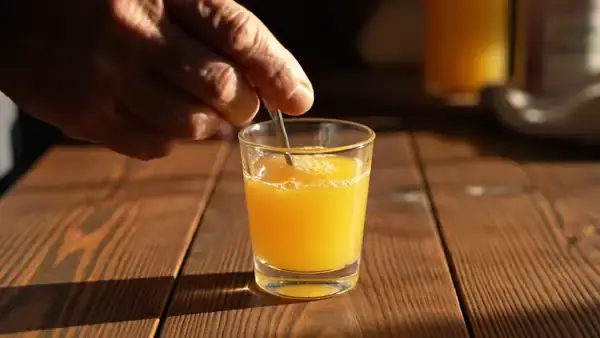
What does it taste like? The maker's own words are "pungent, gingery, slightly sharp, and aromatic."
With ginger on the label and a splash of alcohol in the liquid, "slightly sharp" is the part to expect.
If the sharpness isn't for you, the label allows juice instead of water.
A small glass of orange or apple juice turns the squeeze into something closer to breakfast.
The second squeeze comes in the middle of the afternoon, again between meals.
That's two a day, the low end of the label's range, and the bottle lasts about three weeks at that pace.
Some people take three or four, spaced through the day.
At four, the same bottle lasts about ten days, and you've still taken less plant than one small cup of the European tea.
In the evening, nothing.
The bottle goes back on a shaded shelf, because the label asks you to store it away from heat and light.
Does it take long? No.
The whole thing, shake, squeeze and swallow, takes less time than finding your reading glasses.
A shake, a squeeze and a small glass. That's the whole ritual, twice a day.
That's the honest shape of it.
It's a small habit that fits between meals, and it doesn't ask for anything but a juice glass and a moment.
Here's the running balance at this point in the tour.
Who This Bottle Suits, and Who Should Pass
Every sack at the mill is right for somebody and wrong for somebody else.
Rye flour makes a fine loaf, and it makes a terrible cake.
Who does this bottle suit? Here's my honest list.
- You want a small daily ritual you can do at the kitchen counter, twice a day, between meals.
- You'd rather have a liquid in a glass of water than another capsule.
- You like, or can live with, the sharp taste of ginger.
- You want a maker that names the plant parts, where they're grown and when they're harvested.
- You're comfortable with a traditional herbal product that has a small modern record, and you know that going in.
Who should pass, or check first? This list matters more.
- Anyone who is pregnant: the label asks for expert advice first, and motherwort isn't for pregnancy at all. [10]
- Anyone under 18: Europe's motherwort monograph doesn't recommend it under 18, and its hawthorn monograph doesn't recommend use in children. [10] [2]
- Anyone who avoids alcohol entirely: the liquid is 54 to 64 percent cane alcohol.
- Anyone who wants the amount in a European cup of hawthorn tea: brew the cup instead.
- Anyone looking for a product with its own trial: there isn't one for this bottle.
And if you take anything daily? Then there's one step before the first glass, and the label is the one asking for it.
It asks for caution in anyone who takes something daily for the heart.
So if you take anything daily, especially for the heart and circulation, show this label to your pharmacist before the first glass.
It takes five minutes at the counter, and it costs nothing.
Bring everything you take in one bag, including what you buy off the shelf.
Ask one plain question: "Does anything in here argue with this?"
Five minutes at the pharmacy counter is the cheapest weighing on this page.
The Questions I'd Ask at the Counter
When the fellow on the bench and I went through all this, a handful of questions came up.
They're the ones I'd ask at any counter, so here they are with straight answers.
Is a small amount of plant worth buying? That depends on what you're buying it for.
If you want the European cup's amount of hawthorn, it isn't the right bottle, and a box of loose hawthorn tea is the better buy.
If you want a small, steady ritual with four named plants, it's built for exactly that.
Just go in knowing the size of the measure, which you now do better than most people who own a bottle.
What if I don't like the taste of alcohol? Then use juice instead of water, the way the label allows.
And if you avoid alcohol altogether, pass on this bottle, as I said above.
How long does a bottle last? About three weeks at two squeezes a day, and about ten days at four.
The bottle holds about 42 servings, so you can count it out yourself.
What does it cost? The seller sets the price, and it changes, so check it on the seller's page before you order.
The seller covers ground shipping on orders of $49 or more within the continental United States, and a single one-ounce bottle comes in under that line.
Can I get the bigger bottle? Not when I checked.
On September 26, only the one-ounce size was in stock, and the four-ounce size was sold out.

What if I don't like it? This is the part to read slowly.
The seller's terms say that if you're not satisfied, you can return the product for a replacement or a credit.
You need to tell them within 30 days of purchase to receive a full credit, and you ask for a return authorization number before you send anything back.
It's a replacement or a store credit, not a cash refund, and I'd rather you hear that from me now.
Who do I call? Herb Pharm lists 800-348-4372 for orders, weekdays from 7:00 to 4:30 Pacific time.
Its email is info@herb-pharm.com, and its address is 5448 Bierson Way in Central Point, Oregon.
A fair question deserves a straight answer, and a small bottle deserves a small promise.
The Rest of the Grist: What Costs Nothing
There's a sack at every mill that nobody pays for.
It's the sweepings, the flour that settles on the floor, and the old millers fed it to the chickens.
This section is that sack.
It's the list of things for the heart and circulation that don't come in a bottle, and that have far more behind them than any bottle does.
The walk. The federal activity guidelines set a weekly range of 150 to 300 minutes of moderate activity, such as brisk walking, spread through the week, plus muscle-strengthening on two or more days. [13]
They also say that some activity is better than none. [13]
Bouts of any length count toward the week, even climbing a few flights of stairs. [14]
And 10,000 steps a day is popular advice, not a guideline. [14]
For older adults, the guidelines add balance training, and they say to set your effort by your own fitness, not by somebody else's. [15]
That's good news for anyone who walks at his own pace.
How brisk is brisk? The CDC's talk test is the simplest measure there is.
At a moderate pace you can talk but not sing, and walking at 2.5 miles an hour or faster counts as moderate. [16]
In a laboratory study of 98 healthy adults aged 61 to 85, about 100 steps a minute marked the start of moderate intensity. [17]
My twenty minutes along the creek, at a pace where I can still talk to the herons, is about right.
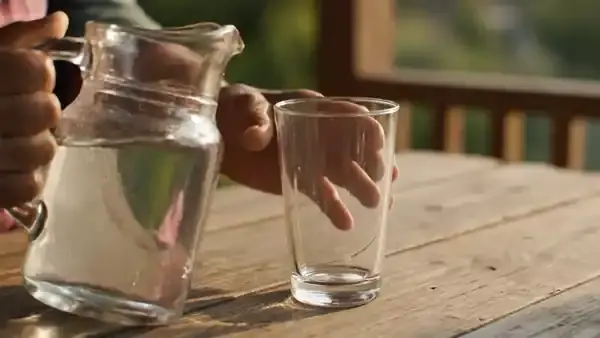
The glass. The current dietary guidelines advise choosing water, still or sparkling, and unsweetened drinks, and avoiding sodas, fruit drinks and energy drinks. [12]
They also advise drinking less alcohol, for better overall health. [12]
The plate. The same guidelines set a goal of 3 servings of vegetables and 2 of fruit a day, eaten whole. [18]
They name olive oil, fish rich in omega-3s, nuts and seeds among the healthy fats, and they advise baking, roasting or grilling instead of deep-frying. [18]
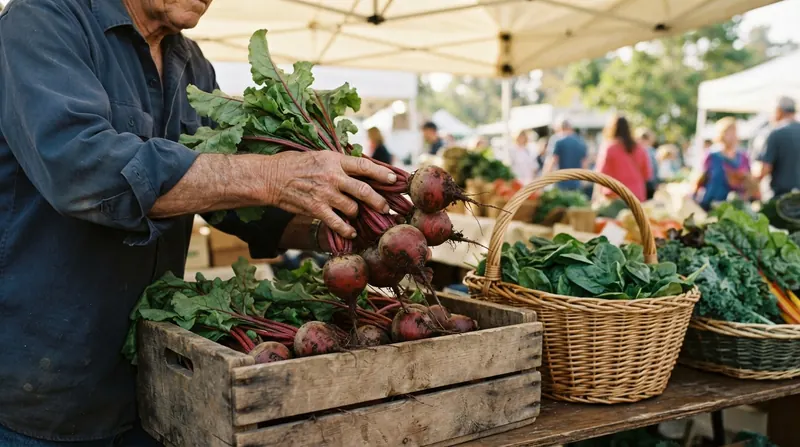
The garden. About 80 percent of the nitrate we eat comes from vegetables, and the body turns part of it into nitrite with the help of bacteria in the mouth. [19]
That's one more reason the vegetable side of the plate matters.
In one analysis, two day-long menus built on the same vegetable-rich eating plan delivered anywhere from 174 to 1,222 milligrams of nitrate, depending only on which vegetables and fruits were chosen. [19]
Leafy greens and beets are the heavy sacks in that comparison.
The salt. Americans eat on average about 3,400 milligrams of sodium a day, against a limit of less than 2,300, about one teaspoon of table salt. [20]
More than 70 percent of it comes from packaged and prepared foods, not the shaker. [20]
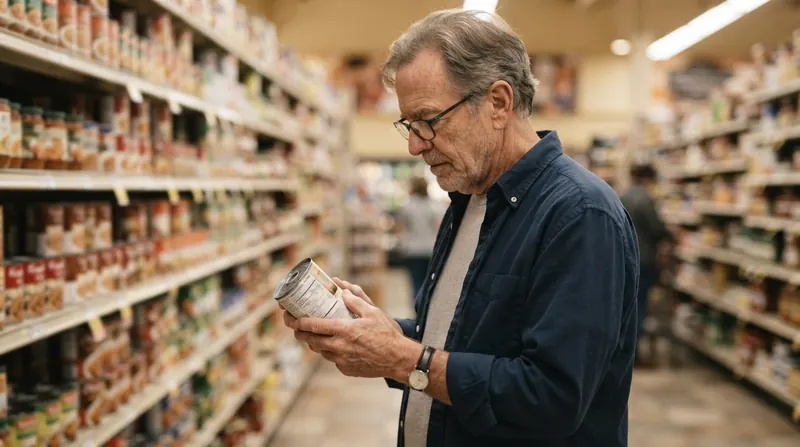
On a food label, 5 percent of the Daily Value or less per serving is low, and 20 percent or more is high. [20]
The guidelines set the same limit of under 2,300 milligrams for everyone 14 and older, not just for men past sixty. [21]
The kettle. If you like a cup of tea, it has its own small measurement behind it.
In 21 healthy women, both green and black tea made the arm artery widen more easily two hours after drinking than water did. [22]
That's a short-term measurement in a small group, not a health outcome.
But it's a pleasant reason to keep the kettle on, and a cup of Europe's hawthorn tea is a kettle habit too.
The night. Adults are advised to sleep 7 or more hours a night on a regular basis. [23]
That's a habit to protect, not something any bottle hands you.
The cigarette. If you still smoke, the CDC says quitting helps at any age, no matter how long you've smoked. [24]
Within a few days, the carbon monoxide in the blood drops to the level of someone who doesn't smoke. [24]
The yearly visit. The American Heart Association's scorecard, Life's Essential 8, scores eight components. [25]
Four are daily habits, diet, activity, nicotine and sleep, and the other four are measurements of the body best checked with a clinician. [25]
So keep the yearly visit.
Half of that scorecard is measured there, and no bottle, this one included, can do that part.
The sweepings on the mill floor have fed more chickens than any sack we ever sold.
None of that replaces the bottle, and the bottle doesn't replace any of it.
They're different sacks, and a good mill has room for all of them.
What Twelve Buyers Wrote
I always read the reviews last, after the label and the research.
Reviews are the part of the weighing done on other people's scales.
How many reviews are there? The seller's page showed twelve for this product when I read it.
All twelve gave five stars, and all twelve were marked by the seller's review system as confirmed purchases.
Twelve is a small stack, and a very happy one.
There were no middling reviews to weigh against the good ones, so I'd read them as the opinions of twelve satisfied customers and nothing more.
I left out the reviews that describe someone's own health history, because a stranger's history isn't a guide to yours.
Here are four of the rest, word for word; the small pictures beside them are illustrations, not the reviewers.

Good product, fair price, prompt shipping

Love this stuff! And Love Herb Pharm! So helpful!

Supporting my over all health and well-being,, especially my heart, is vital. I use Herb Pharm with confidence. it's product is certified organic, wildcrafted, fresh and a big plus for me is that it's local to Oregon. Heart Health comes in 4 ounce bottles, a plus. I use it daily.

So far so good.
What do I take from them? Cheryl's is the one I'd read twice.
"So far so good" is the most honest review a daily ritual can get, and it doesn't claim a thing.
Ingrid's is about the maker more than the bottle: certified organic, wildcrafted, fresh, and local to Oregon.
She mentions the four-ounce bottle, which was sold out when I checked, so plan on the one-ounce size.
Judith's is a shopper's review, about the price and the shipping, and Lia's is plain enthusiasm.
They're opinions about a product, not evidence about what it does, and your own experience may differ.
The Whole Weighing, on One Board
If I had to chalk this whole weighing on the board by the mill door, here's what it would say.
- What it is: a certified-organic liquid extract of hawthorn leaf, flower and berry, night-blooming cactus, motherwort and ginger, made in Oregon.
- How you take it: one squeeze of the bulb in two ounces of water or juice, two to four times a day, between meals.
- What goes in each squeeze: 98 mg of dried plant and 140 mg of fresh plant, all four plants together.
- Beside the European cup: less plant per squeeze than a quarter of the smallest cup of hawthorn tea, 1 to 2 g. [2]
- Behind it: a long tradition and little quality evidence in people for most uses. [1]
- Along with it: about a fortieth of a standard drink of alcohol per squeeze. [11]
- Before the first glass: the pharmacist, if you take anything daily.
- If it isn't for you: a replacement or store credit within 30 days, with a return number first.
One ounce of Oregon extract, taken a squeeze at a time
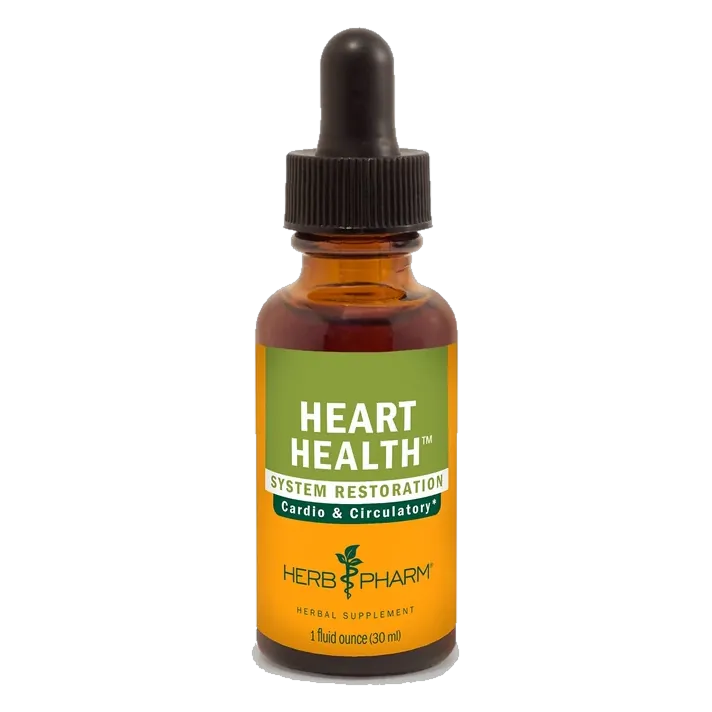
A certified-organic liquid extract of hawthorn leaf, flower and berry with night-blooming cactus, motherwort and ginger, taken as one squeeze of the bulb in two ounces of water, two to four times a day.
CHECK AVAILABILITYMade and sold by Herb Pharm, LLC, Central Point, Oregon · one-ounce bottle, about 42 servings · replacement or store credit within 30 days of purchase, with a return number first
The Last Sack of the Day
I finished this weighing on a Saturday at the end of September, with the wheel still turning and the last school group gone home.
The fellow with the bottle was on the porch bench, where this all started.

I read him the whole ticket.
The four plants, the three harvests, the squeeze beside the cup, the thin record, the splash of alcohol, and the credit-not-cash return.
What did he make of it? A small measure, taken little and often, was how he summed it up.
I told him that was about right.
That's where the weighing lands.
It's an honest bottle, a small measure and a long tradition, and it doesn't pretend to be more.
If you want a daily ritual with named plants and a maker that prints its numbers, it's a fair one to try.
If you want the amount in Europe's cup, put the kettle on instead.

Either way, you now know exactly what's in the squeeze, and what it weighs against.
That's more than the front of any bottle will tell you.
And whichever you choose, keep the walk, the plate, the water and the yearly visit.
They're the heaviest sacks in the mill, and nobody charges for them.
Weigh it going in, weigh it coming out, and write both numbers down.
Made and sold by Herb Pharm, LLC, Central Point, Oregon. The price and any promotion are set by the seller.
Questions from the porch bench
Is this a capsule?
No. It's a liquid herbal extract in a one-ounce amber bottle, taken as one squeeze of the bulb in two ounces of water or juice.
How many squeezes a day?
Two to four, between meals, by the label.
How much plant is in one squeeze?
The label says 98 mg of dried plant and 140 mg of fresh plant per 0.7 ml, all four plants together.
How does that compare with hawthorn tea?
Europe's monograph lists 1 to 2 g of dried hawthorn leaf and flower per cup. [2] One squeeze carries less than a quarter of the smallest cup.
Does it contain alcohol?
Yes, 54 to 64 percent cane alcohol, about a fortieth of a standard drink per squeeze. [11]
What does it taste like?
The maker says "pungent, gingery, slightly sharp, and aromatic." Juice softens it.
Does it contain gluten?
No, by the label.
Can I take it if I'm pregnant?
The label asks for expert advice first, and motherwort isn't for pregnancy. [10]
Should I talk to anyone first?
Your pharmacist, if you take anything daily, especially for the heart and circulation.
What if it isn't for me?
The seller offers a replacement or store credit within 30 days of purchase, with a return authorization number first.
Every plant on the label, with its part, its harvest and what the research does and does not say about it, is written out in the ingredient and advertising guide linked at the foot of this page.
The guide also explains the alcohol, the questions worth asking your pharmacist, and how the squeeze compares with a cup of hawthorn tea.